You know the sequence. You dress for a cold commute, arrive at a desk under a vent that has been blowing since dawn, and by two o'clock you are sitting in a patch of direct sun with your sleeves pushed up. The office is not one temperature. It is five, and they arrive without warning. Guessing at it every morning is exhausting. A formula is easier: thermal base, fine knit, cardigan, scarf. Each layer does one job, each one comes off without ruining the outfit, and the whole thing looks like a decision rather than a person wearing everything they own.
The Formula, Layer by Layer
Four layers, four jobs, ordered from the skin out.
- Thermal base. A thin merino or silk-blend knit that sits against your skin, manages moisture and stays put when everything above it comes off.
- Fine knit. A light-gauge sweater that reads as your actual outfit. The base supports it; the cardigan and scarf top it up.
- Cardigan. The layer you will put on and take off a dozen times. Open-front, easy over the head, roomy enough to slide over the fine knit without dragging it up.
- Scarf. Your fastest temperature control. Around the neck at nine, over the shoulders at three, in your bag at five.
Order matters less than weight. If the base is too thick, everything above it feels tight and you end up carrying the whole pile to the bathroom to strip down. If the fine knit is too chunky, the cardigan won't close cleanly and you lose the shape you built the outfit around.
Start With the Base Layer Most People Skip
A cotton T-shirt feels fine at breakfast and heavy by mid-afternoon, because it holds moisture instead of moving it. Swap it for a thin merino tank or a short-sleeve silk-blend crew. Both are slim enough to disappear under a sweater and warm enough to matter in a cold corner.
Two bases that work under everything
- Light merino tank or tee. Warm for its thickness, breathes well, and resists odour on long days.
- Silk-cotton or bamboo blend. A good option if wool feels itchy against your skin, and it layers without adding noticeable bulk.
Choose a base you would be content to be seen in, because on a warm afternoon you may want to remove the sweater during a meeting. A base that fits close to the body without digging in will not wrinkle into strange lines under a knit.
The Fine Knit Is the Outfit, Not the Extra
Treat the fine knit as the piece people actually see, and the rest of the formula starts to make sense. Look for a smooth, light-gauge wool, merino or fine cashmere with a clean surface. Cables, bobbles and heavy texture belong in a different outfit; under a cardigan they fight for space.
Neckline changes warmth more than most people expect. A crew neck is the neutral choice. A shallow V is cooler and works well if you wear a scarf close to the throat. A turtleneck adds real warmth and suits anyone who is always cold, but if you run hot, a sleeveless knit vest does the same visual job with far less heat.
Fit is where fine knits go wrong. The shoulder seam should sit on your shoulder, not below it. The sleeve should end at the wrist bone. The body should skim your torso, close enough to look neat under a cardigan but not so tight that it pulls across the chest when you reach for a keyboard.
The Cardigan Is Your On/Off Switch
This is the layer you will wear for twenty minutes and then hang over the back of your chair for three hours, so it should be the least precious thing you own. A mid-weight wool or cotton-merino blend in an open-front shape does more for you than an expensive, structured jacket that feels wrong the moment you sit down.
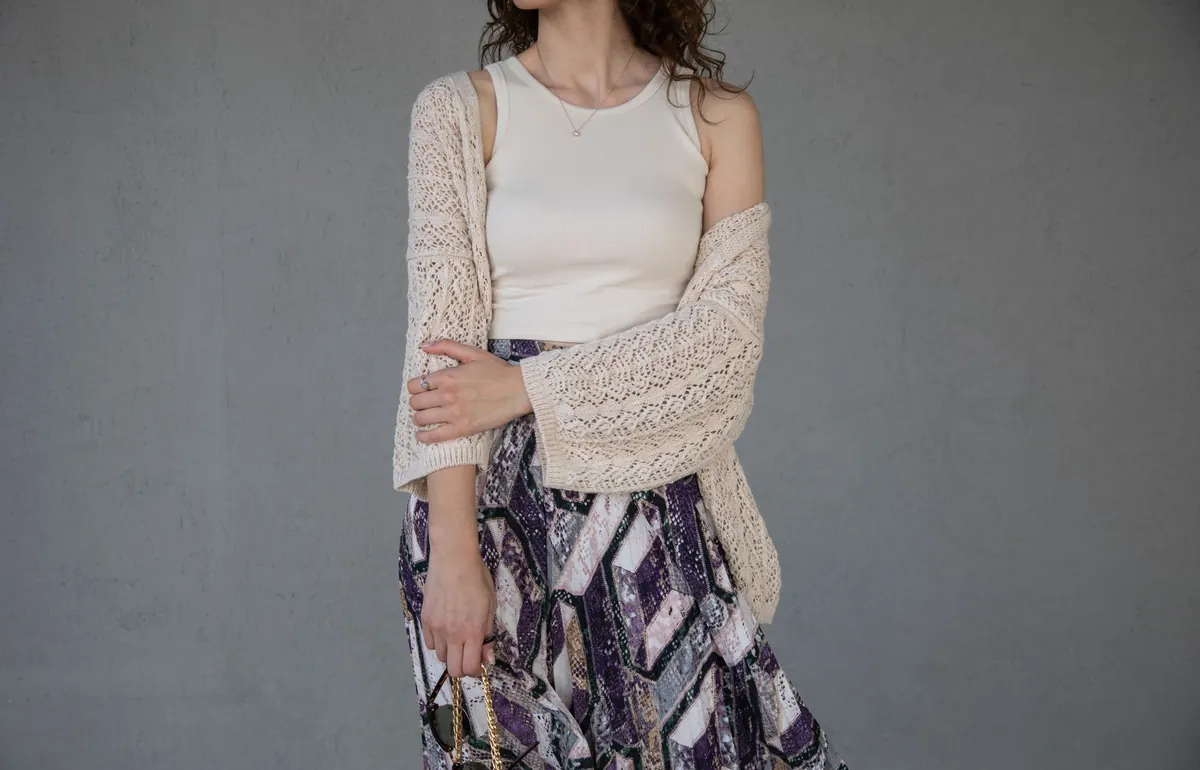
Length matters. A longline ribbed cardigan over slim trousers or a straight skirt creates one clean vertical line. A shorter, boxy cardigan works better over a midi skirt, where it balances volume rather than adding more. If you wear it buttoned, leave the bottom button or two open; that small gap turns a solid block into a shape.
The Scarf Is a Portable Thermostat
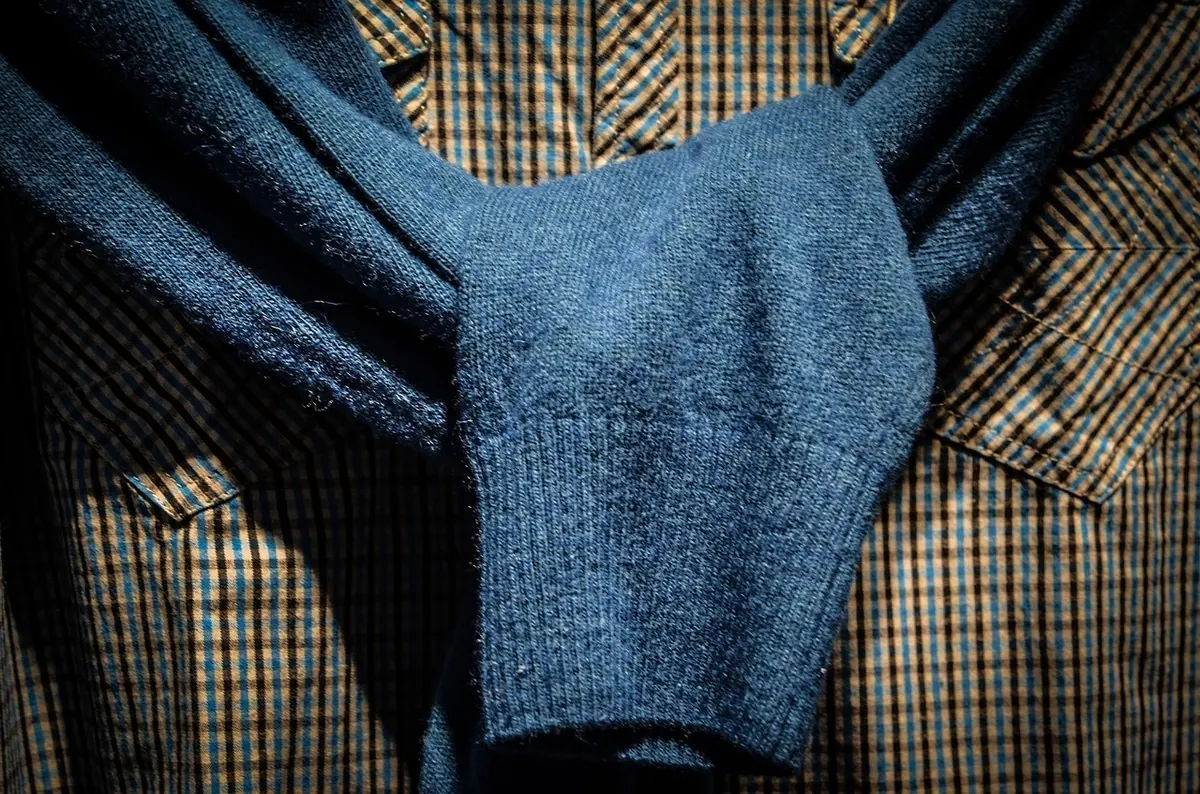
Nothing in your wardrobe changes how warm you feel as quickly as a scarf. Wool around the neck is the closest thing to turning up a dial, which is why it belongs in the formula rather than being an afterthought. Keep a large blanket scarf for desks under vents and a narrow fine-wool or cashmere one for commuting. Silk is the answer for a room that only runs slightly cool.
- Tucked ends. Wrap once, tuck the ends into the cardigan. Maximum warmth, no bulk at the front.
- Shawl style. Drape it over your shoulders when you are stuck in a long meeting and a cardigan would feel like too much.
- Loose knot. One soft knot at the front with the ends hanging breaks up the flatness of a dark knit.
Making Four Layers Look Intentional
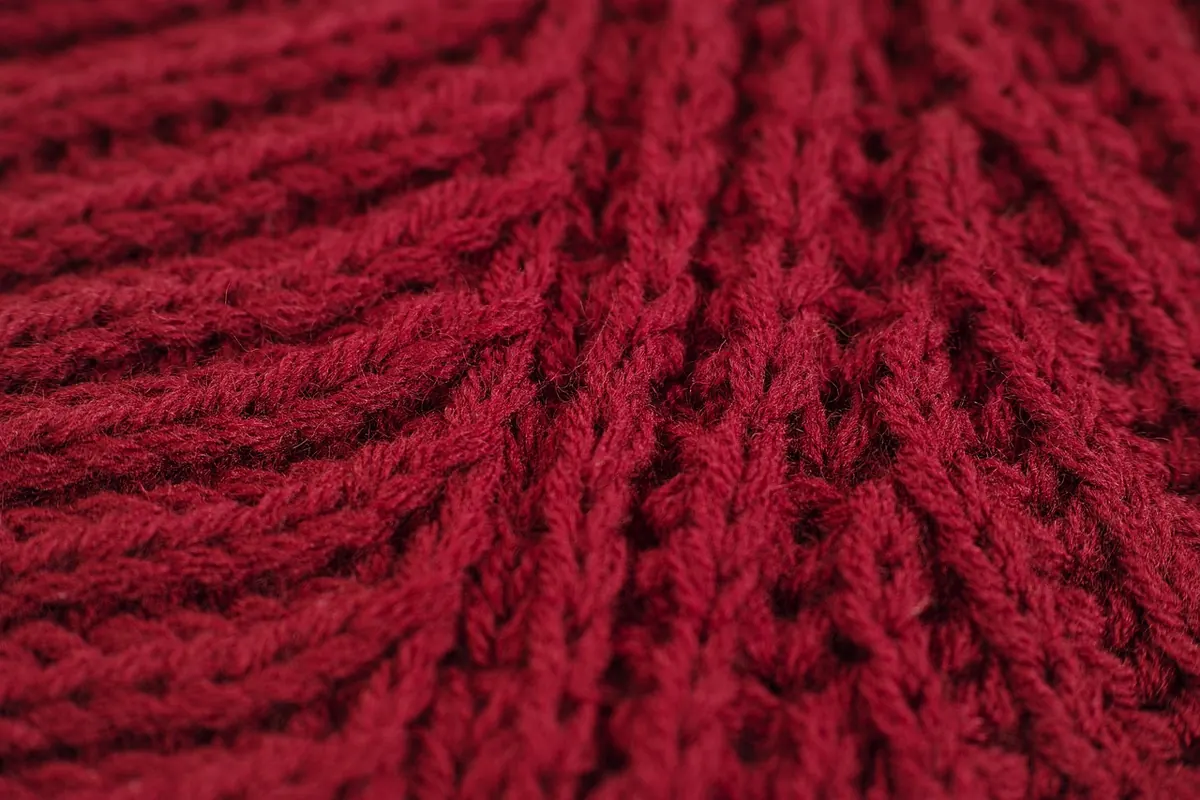
The risk with layering is looking bulky, and the fix is mostly discipline about colour and line. Work with three tones at most, and let them sit close together: oatmeal, camel and cream; charcoal, navy and grey. Contrast texture instead of colour, so a smooth fine knit sits over a ribbed cardigan and under a fuzzy scarf.
Keep the silhouettes narrow and getting longer as they go outward, or the same length. A cardigan that stops above the hem of your knit cuts you in half. If you want one accent, put it in the scarf or the knit and leave the base and cardigan quiet.
Three Combinations to Copy
- Standard office. Oatmeal fine merino crew neck, charcoal longline cardigan, cream silk base, grey wool scarf.
- Cold room. Black turtleneck knit, navy ribbed cardigan, merino tank base, checked blanket scarf.
- Warm room or a hot-natured wearer. Stone sleeveless knit vest, ecru cotton-merino cardigan, white silk base, thin camel scarf.
Each of these follows the same order, but the weights shift with the temperature you expect. That is the whole point of a formula.
Adjust the Weights, Not the Number of Layers
Give the formula a week and pay attention to what you remove first. Most people find their base and fine knit are right, and the scarf is doing the heaviest lifting. From there, change thickness rather than structure: a lighter knit in spring, a warmer base in January, a thinner cardigan for a building that runs hot.
Keep two things at your desk: a spare fine knit and a scarf you don't mind leaving in a drawer. They solve the days when the heating fails or the air conditioning wins, without any need to rethink what you put on that morning.
Photo: Engin Akyurt / Pexels