Spring knitwear has one job: keep you warm at seven in the morning and feel nearly weightless by three in the afternoon. The pieces doing that work best this year are open, light, and soft in color — knits that behave more like a fine layer of air than a woolen holdover from January. Nothing is stiff, nothing is scratchy, and very little is chunky.
If your drawer is still dominated by heavy cables and thick ribs, the shift is easier than it sounds. Three ideas carry most of the season: open weaves, pastels, and pointelle. Here is how they work, and how to wear them while the weather is still deciding what it wants to be.
Open Weaves: The Lightest Way to Stay Warm
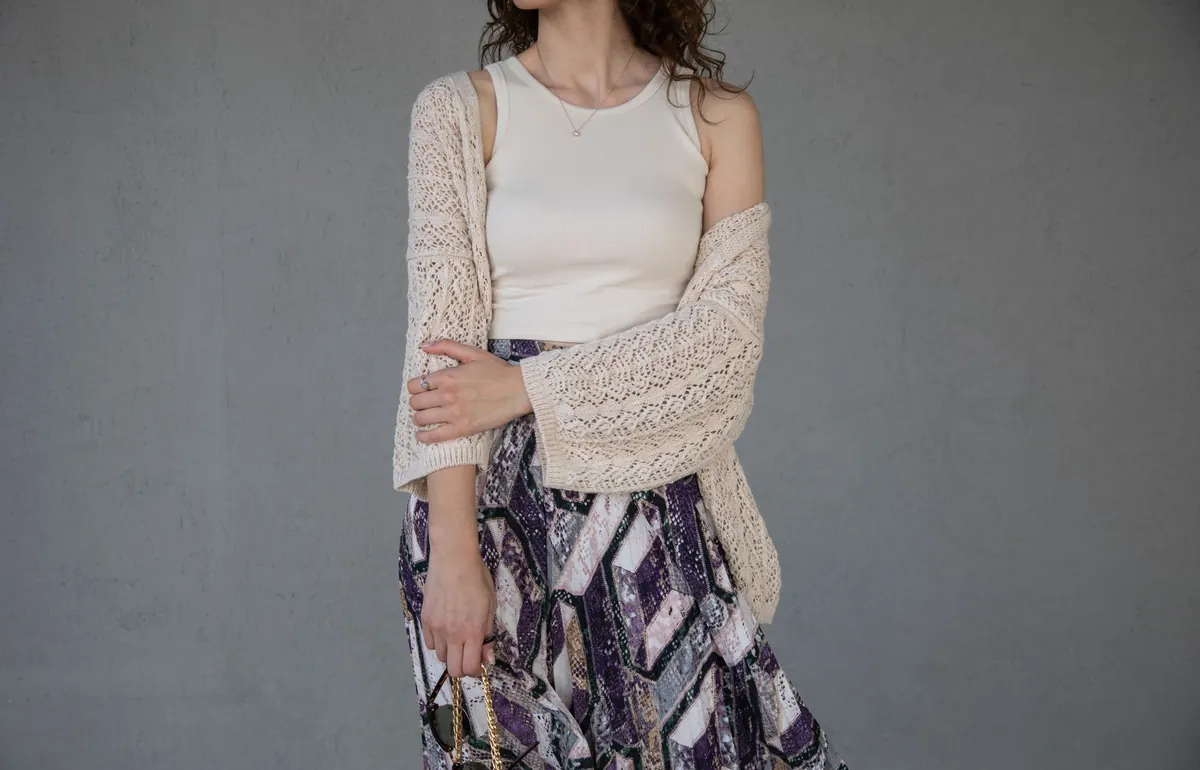
The defining spring knit is one you can almost see through. Pointelle — fine eyelets arranged into little chevrons, diamonds, or scalloped edges — leads the group, followed by mesh with larger, more graphic holes and general openwork in the form of ladders, dropped stitches, and lace-like patterns. They all do the same trick: they hold a layer of warm air next to you without blocking the breeze, so a knit that covers your arms does not roast you on a sunny walk.
Two rules keep these pieces looking intentional rather than accidental.
Watch the gauge. A fine cotton or cotton-blend yarn keeps an open pattern crisp; a fuzzy, loose-spun yarn tends to sag at the shoulders and stretch at the hem. Hold the sweater up to a window before you buy it. You want a clean, readable pattern, not a blur.
Respect the fit. Open knits have less structure than solid ones, so they cling where they touch and pull where they do not. Look for a ribbed neckline and cuffs, a gently boxy body, and enough room through the armhole to raise your arms without lifting the hem. Between sizes, take the larger one — you can always tuck, belt, or roll a sleeve.
What to wear underneath
A smooth camisole or fine-rib tank disappears under open stitches, especially in a tone close to your skin. Patterned bras and lace show through pointelle more than you expect, even in dark colors. If you would rather lean into the sheerness than hide it, layer a mesh knit over a slip dress in a matching shade so the texture reads as a decision rather than an oversight.
Pastels That Look Grown-Up
Soft color is the other half of the story, and this season's version is warmer and less sugary than the word "pastel" suggests: butter yellow, pistachio, blush, powder blue, lilac, sage, and a clean warm ivory. The trick is not to wear them all at once.
Give every pastel one anchor. Indigo denim, navy, charcoal, chocolate brown, and crisp white all steady a pale knit without dulling it. Butter yellow over straight-leg jeans and a brown belt looks deliberate; the same sweater with three other pastels can look like a nursery display. If you do want two soft colors together, separate them by depth — a powder blue cardigan with a deeper teal skirt — rather than matching them exactly.
Pay attention to texture, too. A pastel in crisp cotton reads clean and modern. The same shade in fuzzy mohair reads nostalgic and soft. Both are good; mixing the two in one outfit usually is not.
And do the daylight test. Hold the knit under your chin near a window and see whether your face looks awake or washed out. If it is the second, try the warmer or deeper version of the same color.
Three Ways to Wear Pointelle
- Over a slip dress. Choose a pointelle crewneck a size up and let the dress hem show below. Flat sandals or clean sneakers keep it from feeling precious. Best for warm afternoons and dinner.
- With wide-leg trousers. Tuck the front of a pointelle shell or short-sleeve knit into high-waisted cotton trousers, leave the back loose. A thin belt and a simple tote finish it.
- As a cardigan over a tank. Button two buttons, wear the rest open. This is the version that survives a chilly office and a warm commute.
- Under a trench or cotton blazer. The open pattern adds interest where a plain tee would disappear, and the layer comes off when the sun does.
Fibers That Earn Their Place
Light knits live or die by their yarn. Cotton and cotton-linen hold an open pattern well and soften with every wash; linen blends wrinkle, and that is part of the look. Fine-gauge merino is warm for its weight and ideal for cool mornings, so look for it in a thin, smooth knit rather than anything chunky. Silk and silk-cotton blends drape beautifully in shells and cardigans worn indoors. Viscose-type yarns feel cool and fluid but can stretch, so store them folded rather than on hangers. Crisp cotton tapes and paper yarns give boxy shapes the structure they need.
Care matters more with fine yarns. Wash cold on a gentle cycle in a mesh bag, or by hand, and lay flat to dry on a towel. Hangers will pull the shoulders out of shape within a season.
Dressing for a Twelve-Degree Swing
Spring days often start cold and end warm. Build the outfit in this order and you will rarely be stuck carrying a coat you regret.
- Start with a base that looks finished alone. A ribbed tank, a fine tee, or a light slip is what you will be wearing at two in the afternoon.
- Add the knit. One pointelle crewneck, mesh polo, or lightweight cardigan. Open weaves layer over each other without bulk.
- Choose one layer that can leave the house with you and also come off. An unlined trench, a cotton blazer, or an oversized shirt works better than a padded jacket.
- Pick the bottom for the warmest hour, not the coldest. Wide-leg cotton trousers and midi skirts breathe; heavy denim does not.
- Carry a bag the folded layer actually fits into. A small shoulder bag and a bulky cardigan are a bad pairing.
Details Worth Paying For
Small construction choices separate a knit you wear weekly from one that sits in the drawer. Look for buttons that feel substantial and a placket that does not gape when buttoned. A slightly open crew or a soft V-neck layers more easily than a tight boat neck. Scalloped edges, tie fronts, polo collars, and cropped cardigans with real working buttons all add character without turning the sweater into a costume. Check the seams at the shoulder and underarm; on fine knits, that is where cheap construction shows first.
Where to Start
You do not need a new wardrobe, just two pieces that pull their weight. Begin with one open-weave knit in a pastel you have already tested against your face in daylight, then add a fine-gauge neutral — ivory, navy, or oatmeal — that can sit under a blazer or over a slip dress. Try each one on over the exact top you plan to wear beneath it, because fit under the arm and across the chest is where most returns happen.
Keep the care simple: cold water, mesh bag, flat drying, folded storage. Treated that way, a good spring knit will outlast the trend that sold it — which is the most practical argument for spending a little more on one you genuinely like wearing.
Photo: Alexas_Fotos / Pixabay