A sweater can be the right color, the right size, and still feel off. Nine times out of ten the culprit is texture. Ribbing pulls the eye up and down, cables push volume forward, and waffle knits bounce light in a hundred small squares. None of that shows up in a product photo the way fit does, which is why so many of us end up with a beautiful sweater that only works with one pair of trousers.
Once you know what each texture is doing, the decisions get easier — what to wear it with, what to layer over it, and which shapes to leave on the rack.
What Texture Actually Does to a Sweater
Three things happen the moment a knit gets surface relief.
It draws lines. Vertical ridges stretch the silhouette. Horizontal ones widen it. Twisted cables zigzag and create their own architecture.
It changes the light. Flat stockinette reflects evenly and reads as a smooth block of color. Textured stitches throw small shadows, which makes the same shade look deeper, warmer, and more casual.
It adds bulk. Raised stitches sit away from the body, and that distance is volume you can see. A fine-gauge rib and a chunky cable in identical sizes will not look remotely similar on.
Ribbed Knit: The One That Moves With You
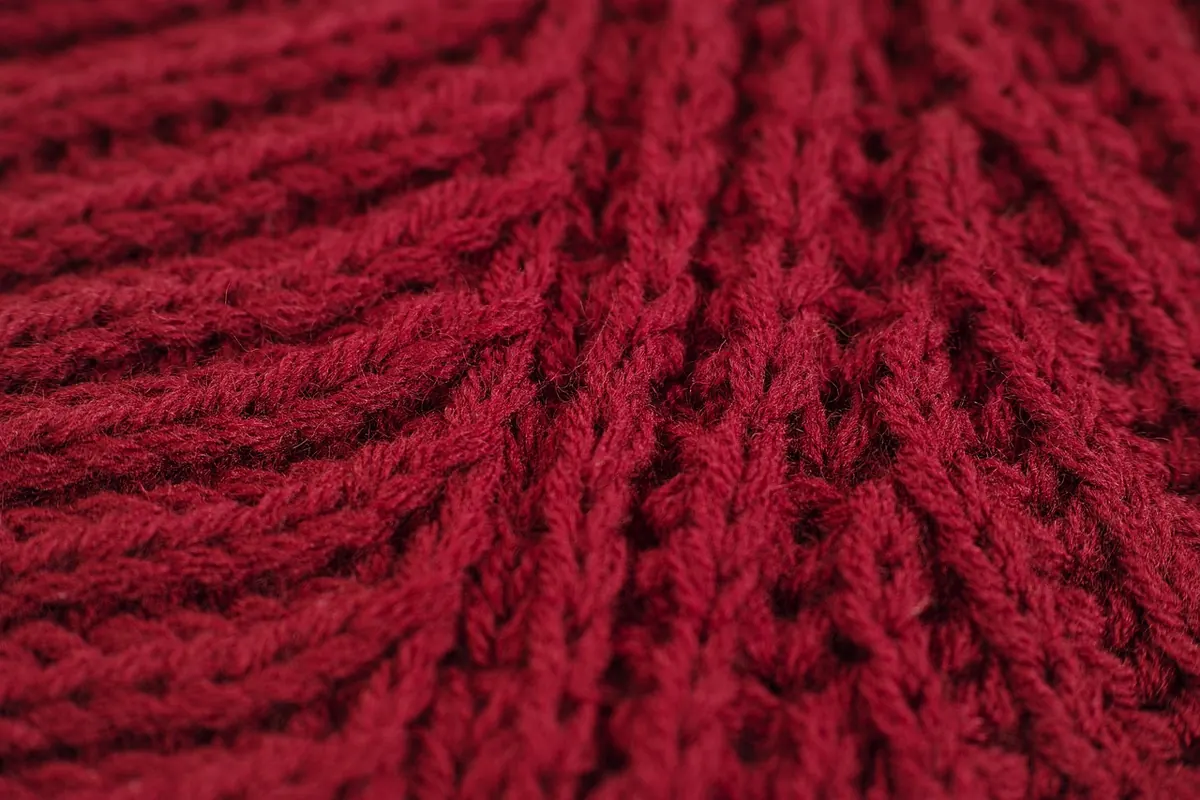
Ribbing alternates knit and purl columns, which is why it snaps back into shape and why it's used at cuffs, hems and necklines on almost everything. As a full sweater, it's the most forgiving of the three.
The vertical lines do the heavy lifting. A fine 1x1 rib in a dark color reads almost like a smooth knit from across a room but hugs the body enough to look intentional rather than sloppy. Wider ribs — 2x2, 3x3, or the chunky ribs on a fisherman's sweater — read more relaxed and less revealing, because the gaps between ridges break up the outline.
Where ribbing earns its keep
Fitted turtlenecks, long-sleeve crewnecks worn under blazers, and mid-weight cardigans. It layers beautifully because it's thin and it compresses. If you carry weight through the middle and want something that skims rather than clings, look for a wide rib in a slightly heavier yarn and size up once.
The one caution: very fine, very tight rib in a light color shows every contour. That's a feature if you want it, a problem if you don't.
Cable Knit: Sculpture You Can Wear
Cables are stitches crossed over each other, and they sit proud of the surface. A cable sweater is the loudest of the three — it announces itself from ten feet away.
That's wonderful if you're slim, narrow-shouldered, or just want to look softer and cozier. A chunky cream cable-knit crewneck on a lean frame is one of the most flattering things in a winter wardrobe. It's less wonderful across a full chest or over wide hips, where the raised panels add inches that aren't there.
You can get the look with less weight. A single cable running up the center front of an otherwise plain sweater gives you the texture without the bulk. Cable panels on the sleeves only is another trick — arms look interesting, the torso stays clean.
Pair cables with smooth, matte fabrics: dark denim, wool trousers, leather boots. Skip busy prints and heavy scarves; the sweater is already doing the talking.
Waffle Knit: Texture Without the Weight
Waffle knit — also called thermal knit — is a grid of small raised squares. Those pockets trap air, so a waffle sweater is warmer than its weight suggests, which makes it an excellent mid-layer under a coat or a denim jacket.
Visually it's the most casual of the three. It reads utilitarian, a little athletic, and it tends to sit away from the body in a boxy way. That's great for a relaxed henley or a weekend pullover; less great if you want polish for an office.
Two practical notes. Waffle knits don't drape much, so check the shoulder seam lands on your actual shoulder — otherwise the whole thing looks borrowed. And the raised squares snag easily on bag straps, watch bands and rough zips, so keep it away from anything with a hook or a burr.
Mixing Textures in One Outfit
The rule is simple: one hero, everything else quiet. If your sweater has cables, the rest of the outfit should be smooth. If your sweater is a plain fine rib, you have room to bring in a textured scarf or a chunky boot.
- Cable sweater + dark denim + leather boots. Classic, no effort required.
- Fine ribbed turtleneck + tailored wool trousers + blazer. Texture does the styling so the outfit doesn't need accessories.
- Waffle henley + canvas jacket + straight-leg chinos. Weekend, done.
- Ribbed body, cable sleeves. A good middle path if full cables feel like too much.
- Avoid: cable sweater over a cable scarf, or waffle knit under a waffle coat. Same texture twice cancels itself out and looks accidental.
Match the Texture to Your Proportions
Use this as a starting point, then trust the mirror over the rule.
- Broad shoulders or full chest: wide rib or a plain knit with a small cable detail. Skip allover chunky cables.
- Narrow shoulders or a slim frame: cables, chunky ribs, anything with visible relief. You can carry the volume.
- Long torso: horizontal textures — waffle is ideal — break up the length.
- Short torso: vertical ribbing and a higher hem line keep things in proportion.
- Fuller arms: ribbed sleeves skim; cable sleeves add. Choose accordingly.
- Height under about 5'4": keep the yarn weight moderate. Chunky cables and oversized waffle knits can shorten you.
Try This Before You Buy
Take the sweater to a window and look at it in daylight, not under shop lighting — that's where you'll see how much shadow the texture throws. Try it on over the layers you'd actually wear underneath; a cable knit that fits over a tee may not fit over a shirt. Check the underarm: if extra fabric bunches there, the texture is already too bulky for your frame.
Then look after it. Fold heavy knits rather than hanging them, since a cable sweater on a hanger will stretch at the shoulders over a season. Cables relax with wear and washing, so they'll soften and sit a little flatter; ribbing springs back and holds its shape longest; waffle knits keep their grid but are the quickest to pill where your bag strap rubs.
Buy the texture that suits your proportions first and the color second. Color is easy to work around. A silhouette that fights you never quite does.
Photo: Engin_Akyurt / Pixabay